
Which Gold Purity to Buy: 18K, 22K or 24K?
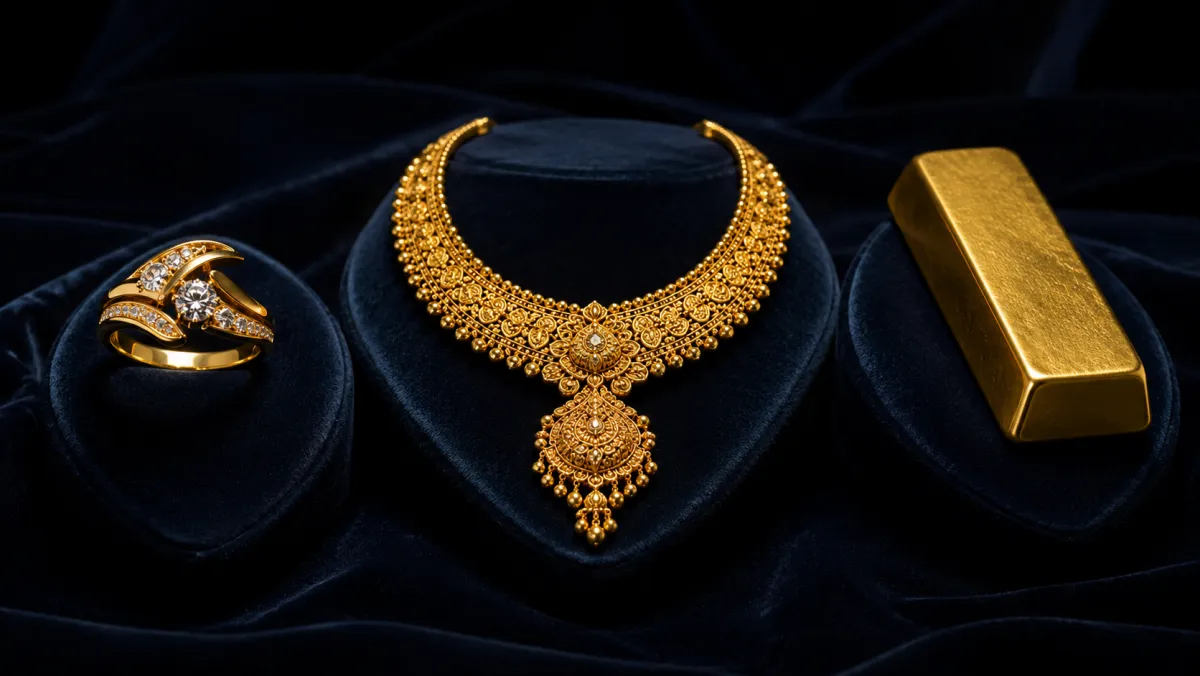
Beyond the familiar 22K and 24K, you will also see 18K gold, especially in studded and designer jewellery. Each purity has a sweet spot. This short guide helps you match the karat to how you will actually use the gold.
The three common purities
24K is 99.9% pure and softest; 22K is 91.6% pure and durable enough for daily wear; 18K is 75% pure (stamped 750), harder still and often used for diamond and gemstone jewellery.
- 24K — 99.9% pure (999)
- 22K — 91.6% pure (916)
- 18K — 75% pure (750)
Durability vs purity trade-off
Lower karats contain more alloy, so they are harder and more scratch-resistant. That makes 18K ideal where stones must be held securely, while 24K is reserved for investment because it dents easily.
Price
More purity means more cost per gram: 24K > 22K > 18K. But 18K and 22K jewellery also carry making charges, so the final bill depends on design as much as purity.
Choosing by purpose
For pure investment, pick 24K coins, bars or SGBs. For traditional gold jewellery, 22K is standard. For modern, stone-studded or designer pieces that need strength, 18K is often the practical choice.